Ejaz Nijadi – A Journey of Resilience, Hope and Opportunity
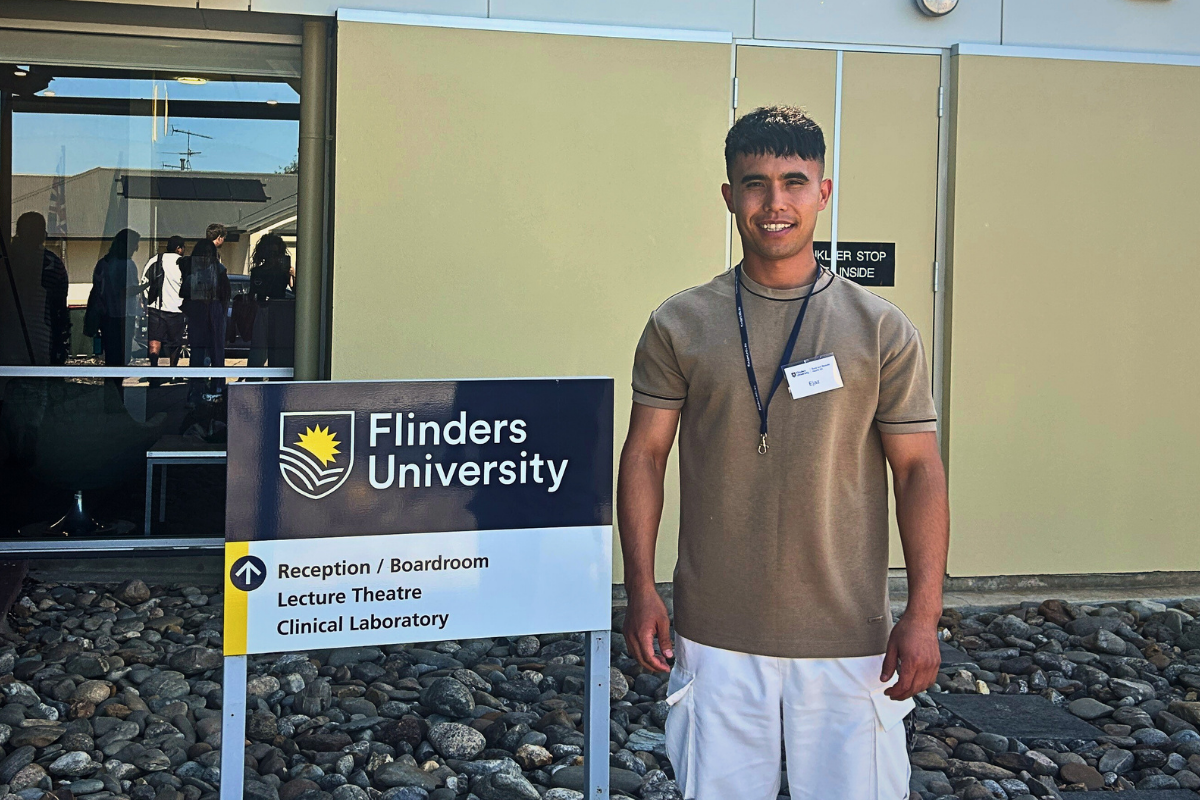
When Ejaz Nijadi arrived in Australia at the age of 12, he carried no schoolbooks, no English language skills and no experience of a classroom. What he did carry was a quiet determination built over years of hardship and a hope that life in a new country might offer the chance to learn. Today, at 24, he is realising a dream that once felt unimaginable: he is studying to become a doctor at Flinders University’s South Australian Rural Medical (SARM) Program in Mount Gambier. With support from the Rackhams Sub‑Fund of Stand Like Stone, Ejaz is stepping into the future he has worked tirelessly to build.

Ejaz was born in Accha, a small rural village in Jaghori province, Afghanistan. He is Hazara – a minority group persecuted for centuries for its ethnicity and religious beliefs. Growing up in a remote community, education was never an option. As a child he worked as a shepherd, watching other children walk to school and silently wishing he could join them. His parents had not been to school and could not read or write, yet they held dreams of education for their children.
Forced from their homeland, Ejaz and his family arrived in Australia with the help of the United Nations. He entered school for the first time, unable to speak a word of English. “I used to cry every day after school because I didn’t understand anything,” he recalls. But supportive teachers and his own determination helped him persevere. Over years of effort, he became the first in his family to receive an education – and now the first to attend university.
Ejaz’s journey has been shaped not only by academic ambition but also by deep family responsibility. His father lives with serious health issues and relies on Centrelink support. His mother is learning English through TAFE and cannot work. As the eldest child, Ejaz worked on farms every weekend to help buy food and essential items. More recently he has taken on phone interpreting work to support his family, but the irregular hours often clash with university classes. The pressure has been enormous, yet his commitment to medicine has never wavered.
“I study seven to eight hours each day,” he says, driven by a desire not only to succeed for himself but to lift the people he loves. His sister sends him some money each fortnight to help him get by. Rent, groceries, transport and university expenses add up quickly, leaving little room for anything else.
This is where the Stand Like Stone scholarship becomes life-changing. A $10,000 scholarship through the Rackhams Sub Fund will ease the financial strain on Ejaz’s family, reduce his need to work during classes and free him to focus on becoming the compassionate doctor he hopes to be. It will also allow him to participate more fully in local life – from cricket with West Gambier Cricket Club to social badminton twice a week – activities that have helped him connect to community and feel at home in the Limestone Coast.
Giving back is central to who Ejaz is. He provides interpreting support to Hazara, Tajik and Pashtun community members navigating medical appointments, Centrelink and legal matters. He tutors three local students for the GAMSAT exam every Sunday, free of charge, hoping to help others find their path into medicine. He has also begun speaking in schools about his journey, including a return to the Adelaide Secondary School of English where he first learned English as a teenager.
Ejaz has chosen to stay in Mount Gambier for his entire medical degree and hopes to complete his internship in the region. “I love this place and the people are so welcoming,” he says. His dream is to serve rural communities, particularly those facing disadvantage or language barriers.
Ejaz’s story is one of courage, humility and perseverance – and a powerful reminder of what education can make possible. With support from the Rackhams Sub Fund and Stand Like Stone, he is not only changing his own life but building a future dedicated to helping others.
Sign up and stay inspired!
Subscribe today to receive Stand Like Stone’s e-newsletter to stay up to date with our latest news and inspiring stories about the ways your contributions are helping to make a difference in our community. Newsletters are usually distributed around quarterly.
We acknowledge the Aboriginal people as the First Nations of these lands and waters of the Limestone Coast. We acknowledge the Elders, past, present and future, and we respect the ongoing deep feelings of attachment and relationships of First Nations people to country.
Artwork by Aunty Michelle Jacquelin-Furr depicting the waterholes, landforms and stones of the Limestone Coast.